Choosing steel by appearance alone is an expensive mistake. A bright surface may look excellent, yet it can hide poor corrosion resistance, unsuitable hardness, or excessive processing costs. This guide explains how to choose the right steel sheet for construction, fabrication, automotive parts, machinery, and everyday repairs. It focuses on practical decisions, not impressive-sounding specifications.
Materials scientist Michael F. Ashby offers a useful principle: “The best material is the one that does the job at the lowest cost.” That idea sounds simple. Real projects are less simple. You must compare grade, thickness, strength, ductility, surface finish, coating, formability, weldability, and delivery requirements. A 2-millimeter galvanized sheet may suit an outdoor enclosure, while a cold-rolled sheet may produce a smoother indoor panel. The cheapest option can become costly after cracking, rusting, or repeated rework.
This article presents seven tips for how to choose the right steel sheet with greater confidence. You will learn how service conditions affect grade selection, why thickness should match loading, and when coated steel deserves serious consideration. It also examines cutting, bending, welding, tolerances, and supplier documentation. Small details matter. A damp warehouse, sharp bend, or poorly stated tolerance can change the result. Some recommendations may not fit every project, and that is worth admitting. Steel selection involves trade-offs, not perfect answers. Check current standards, confirm the mill certificate, and ask a qualified engineer when safety depends on the material choice.
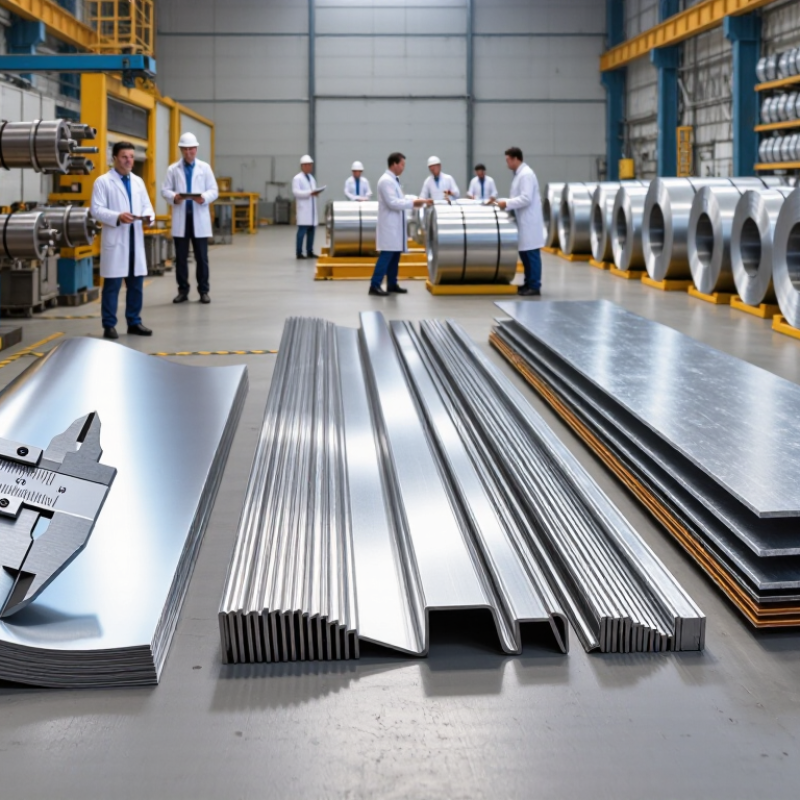
How to Choose the Right Steel Sheet: 7 Tips
Identify the steel sheet type and grade before comparing prices. Carbon steel suits many structural projects, while stainless steel resists moisture and chemical exposure. Galvanized sheet adds a protective zinc layer for outdoor applications. Do not choose by appearance alone. Check the grade, thickness, yield strength, tensile strength, and surface finish. These details affect cutting, bending, welding, and service life. Tip 1: Match the grade to the environment. A dry workshop needs different protection than a coastal installation.
Tip 2: Review the material certificate and test data. Reliable documentation should identify the heat number, chemical composition, mechanical properties, and dimensional tolerances. Ask whether the sheet meets the required technical standard. Tip 3: Confirm the real thickness with a micrometer. Coatings and measurement tolerances can create surprises. I have seen sheets look correct but fail during forming because the selected grade was too brittle. That mistake was avoidable.
Tip 4: Consider how the sheet will be processed. Deep drawing needs good ductility, while load-bearing parts require dependable strength. Tip 5: Check weldability before production begins. Some higher-strength grades need controlled heat input or preheating. Tip 6: Inspect flatness, edges, scratches, and coating coverage under clear light. Tip 7: Test a small sample when the project is important. This costs time, but it reveals springback and forming problems early. I would not rely on a catalog description alone. Ask a qualified engineer or material specialist when the application involves unusual loads, heat, or corrosion.
Choosing steel sheet starts with the load, not the price. Measure the span, support spacing, and expected force. A roof panel and a machine bracket may need different thicknesses. Thin sheet bends quickly under point loads. Heavy sheet adds weight, cutting time, and handling effort. I usually sketch the final part before ordering material. This exposes awkward folds and hidden clearance problems. Measure twice.
Check thickness against the design drawings, fabrication method, and available tools.
A press brake needs enough capacity for the gauge and bend length. Tight bends can crack material when the radius is too small. Ask the supplier for certified thickness and grade information. Nominal dimensions are not always exact. Compare sheet length and width with the finished layout. Leave room for trimming, kerf, bend allowance, and edge cleanup. A small layout error can create costly scrap. I have learned that standard size
is not always the best size.
Match the surface and strength requirements to the working environment. Outdoor parts may need corrosion-resistant steel or a suitable protective finish. Structural members need engineering checks for buckling, deflection, and connection strength. Consult a qualified engineer for critical load-bearing applications. Fabricated panels may prioritize flatness and clean edges instead. Keep records of grade, thickness, heat number, and inspection results. This supports traceability and simplifies replacement. Recheck the assumptions. Real loads often differ from estimates.
Evaluate strength, durability, and environmental resistance before selecting any steel sheet. Start with the application’s actual loads, not an idealized estimate. Check yield strength, tensile strength, and elongation on the material certificate. A stronger sheet is not always better. Excessive strength can make forming and welding more difficult. Consider thickness, bend radius, and edge condition together. A 2-millimeter sheet with clean edges may perform better than a thicker sheet with hidden defects.
Durability depends on more than hardness. Inspect the surface for scratches, scale, pits, and uneven coating. Small damage can become a corrosion path around fasteners and cut edges. For outdoor use, examine humidity, salt exposure, temperature changes, and chemical contact. Galvanized or coated steel may resist corrosion, but protection can weaken during cutting or welding. Ask for coating thickness, adhesion data, and relevant test reports. Then compare those results with the site conditions.
I have seen installations fail because the environment was underestimated. It looked mild. Six months later, rust appeared beneath a joint. That mistake changed my checklist. I now inspect drainage, trapped moisture, and contact with dissimilar metals. Verify dimensions and flatness before production. Request samples when appearance matters. Test a bend if the supplier permits it. Data sheets are useful, but they cannot reveal every handling problem. Leave a reasonable safety margin, while admitting that field conditions are rarely perfect.
Choosing the right steel sheet starts with its surface finish. In my experience, many failures begin with a finish chosen for appearance alone. A smooth cold-rolled surface suits painted indoor panels and precise fabrication. A textured or galvanized surface may perform better outdoors. Check the forming process too. A hard coating can crack around tight bends.
Corrosion protection depends on the actual service environment. Humid workshops, coastal air, road salt, and chemical exposure create different risks. For outdoor use, compare coating type, coating thickness, and edge protection. Zinc coatings protect exposed steel sacrificially, but damaged areas still need attention. Pre-painted sheets add another barrier, although scratches and cut edges can become weak points. Do not rely only on a salt-spray result. Real conditions are less tidy.
Inspect the sheet before installation. Look for pinholes, uneven coating, stains, and transport scratches. Ask for coating test data and confirm the intended environment. I once underestimated condensation inside a poorly ventilated enclosure. The sheet looked suitable, but hidden moisture caused early rust. That mistake changed my inspection checklist. Think about drainage, fasteners, and sealed joints, not just the sheet surface. A perfect finish cannot compensate for trapped water.
| Tip | Selection Factor | Suitable Steel Sheet or Finish | Typical Characteristics | Recommended Environment | Important Checks Before Purchase |
|---|---|---|---|---|---|
| 1 | Define the exposure level | Bare carbon steel for dry indoor applications; zinc-coated or painted sheet for outdoor and humid conditions. | Corrosion risk increases with moisture, salt, pollutants, condensation, and repeated wet–dry cycles. | Match the material to the actual service environment rather than selecting by appearance alone. | Identify humidity, temperature, salt exposure, chemical contact, drainage conditions, and expected service life. |
| 2 | Choose the base manufacturing finish | Hot-rolled sheet, cold-rolled sheet, or pickled and oiled sheet. | Hot-rolled sheet generally has a rougher mill scale surface; cold-rolled sheet offers a smoother, more consistent surface. | Cold-rolled sheet is often selected for visible panels and forming; hot-rolled sheet is common for structural and general fabrication work. | Confirm surface roughness, dimensional tolerances, forming requirements, and whether mill scale must be removed. |
| 3 | Select the corrosion-protection coating | Hot-dip galvanized, electrogalvanized, aluminum-coated, or zinc–aluminum-coated sheet. | Zinc coatings provide barrier protection and can offer sacrificial protection at small scratches; alloy coatings may improve heat or atmospheric performance. | Select according to moisture, outdoor exposure, temperature, and the required coating durability. | Request coating type, coating mass or thickness, test method, edge condition, and allowable surface defects. |
| 4 | Match coating weight to service life | Light, medium, or heavy metallic coating selected by specified coating mass or thickness. | A heavier coating generally provides more available protection, but actual performance depends on exposure, forming, cut edges, and maintenance. | Use higher coating levels for prolonged outdoor, humid, industrial, or coastal exposure when appropriate. | Do not compare nominal coating designations without checking whether values are total both-side mass, single-side mass, or coating thickness. |
| 5 | Consider painting or organic finishing | Prepainted steel sheet or metallic-coated sheet prepared for post-fabrication painting. | Paint adds a barrier layer, provides color, and can reduce direct contact with moisture and contaminants. | Useful for building panels, equipment housings, doors, enclosures, and applications requiring a controlled appearance. | Check primer and topcoat compatibility, film thickness, forming limits, color stability, repair method, and warranty conditions. |
| 6 | Check fabrication and forming effects | Formable cold-rolled or coated sheet with a grade suitable for bending, stamping, or roll forming. | Severe bending can damage coatings, expose edges, or create localized cracking if the grade and tooling are unsuitable. | Choose the material based on bend radius, drawing depth, hole-punching, welding, and cutting requirements. | Verify minimum inside bend radius, forming direction, weldability, tooling clearance, and the need for edge touch-up. |
| 7 | Plan inspection, storage, and maintenance | Any selected sheet with documented certificates, protective packaging, and a defined maintenance plan. | Even corrosion-resistant sheet can develop storage stains, cut-edge corrosion, or damage from trapped moisture and abrasion. | All environments, especially outdoor, coastal, industrial, and enclosed areas with condensation risk. | Inspect coating continuity, thickness, flatness, scratches, rust, packaging condition, ventilation, drainage, and cleaning intervals. |
Choosing steel sheet starts with a real cost comparison, not the lowest quotation. Ask for the exact grade, thickness, width, finish, and quantity. A cheaper sheet may carry higher freight, cutting, storage, or inspection costs. Request a delivered-price breakdown before approving the purchase. Include taxes, packaging, and unloading where relevant. Cheap is not cheap. Compare at least three written quotations with identical specifications. Otherwise, the numbers only look comparable.
Availability can determine whether a project moves or waits. Confirm current stock, production capacity, minimum order quantity, and realistic dispatch dates. Ask whether the supplier holds material locally or depends on another mill. A promised seven-day delivery means little without a confirmed shipping plan. For urgent work, reserve a small batch and verify its dimensions on arrival. I once accepted a lower price after hearing “ready stock.” The sheets arrived late, and the saved money disappeared through overtime. That mistake still affects how I assess lead times.
Supplier quality requires evidence, not confident language. Request recent material certificates, dimensional inspection records, and clear information about surface defects. Check how the supplier handles complaints, replacements, and traceability. A reliable supplier should identify heat numbers and connect them to delivery documents. Ask for a sample or small trial order when the application is sensitive. Inspect flatness, edge condition, rust, and actual thickness with calibrated tools. Do not assume a polished certificate proves every shipment is consistent. A strong supplier may cost slightly more, but unstable quality can damage tooling, delay fabrication, and create waste. Leave room to question your own assumptions.
Match the sheet to the environment and project function. Carbon steel suits many structural applications. Stainless steel handles moisture and chemical exposure better. Galvanized sheet offers zinc protection outdoors. Appearance alone is insufficient.
Confirm grade, thickness, yield strength, tensile strength, and surface finish. These properties affect cutting, bending, welding, and service life. Record the required width and quantity too.
A dry workshop needs less protection than a coastal installation. Moisture and chemicals can accelerate corrosion. Select protection based on actual exposure, not habit. I sometimes underestimate coastal conditions.
It should show the heat number, chemical composition, mechanical properties, and dimensional tolerances. Confirm the required technical standard. Connect the certificate with delivery documents for traceability.
Measure it with a calibrated micrometer. Coatings and tolerances can create unexpected results. A sheet may look correct but fail during forming. Measure before production.
Deep drawing requires good ductility. Load-bearing parts need dependable strength. Welding may require controlled heat input or preheating. Test a small sample to observe springback and forming behavior.
Check flatness, edges, scratches, rust, coating coverage, and actual thickness. Use clear light and calibrated tools. A certificate cannot reveal every shipment defect. Inspect carefully.
Compare written quotations with identical grades, dimensions, finishes, and quantities. Include freight, packaging, taxes, unloading, cutting, storage, and inspection costs. Confirm stock, minimum order quantity, and dispatch dates. Cheap is not cheap.
Choosing the right steel sheet begins with understanding your project’s specific requirements. First, identify the appropriate steel type and grade based on the intended application, forming needs, load conditions, and welding requirements. Then, select a thickness and sheet size that fit the structural design while minimizing unnecessary cutting, bending, or material waste. It is also important to evaluate strength, durability, and resistance to moisture, heat, chemicals, or other environmental conditions that may affect service life.
When considering how to choose the right steel sheet, pay close attention to the surface finish and available corrosion protection, especially for outdoor or demanding environments. A smooth, coated, or treated surface may improve appearance, maintenance, and long-term performance. Finally, compare total cost rather than price alone, taking availability, delivery time, dimensional consistency, certifications, and supplier quality into account. A carefully selected steel sheet can improve fabrication efficiency, reliability, safety, and overall project value.

Puppet Steel