Steel sheets remain essential to cars, appliances, buildings, and clean-energy equipment. Yet their environmental cost begins long before a sheet reaches a factory floor. Mining, coking, furnace operations, rolling, coating, transport, and end-of-life recycling all shape the final footprint. This raises a practical question: how sustainable are modern steel sheets produced in China?
The answer is not simply green or grey. Chinese mills use different technologies, energy sources, and scrap ratios, so their impacts can vary widely. Basic oxygen furnaces often depend heavily on iron ore and coal, while electric arc furnaces can use more recycled steel. However, their performance depends on electricity quality, scrap availability, and production efficiency. A bright, smooth galvanized sheet may look sustainable, but its coating materials and processing energy still require careful assessment.
Reliable evaluation needs evidence. Product carbon footprints, lifecycle assessments, recycled-content records, energy data, and independent certifications can reveal more than marketing language. Factory visits also matter. A weighbridge, scrap yard, or rolling line can show operational details that brochures often omit. Even then, comparisons may remain imperfect because companies use different boundaries and assumptions. That is worth admitting.
This introduction examines emissions, resource efficiency, durability, recycling, supply-chain transparency, and emerging low-carbon technologies. It also considers how Chinese steel producers are responding to customer pressure and changing environmental expectations. Some improvements are real. Others may be overstated. A balanced review must recognize both progress and unresolved weaknesses before judging the sustainability of modern steel sheets.
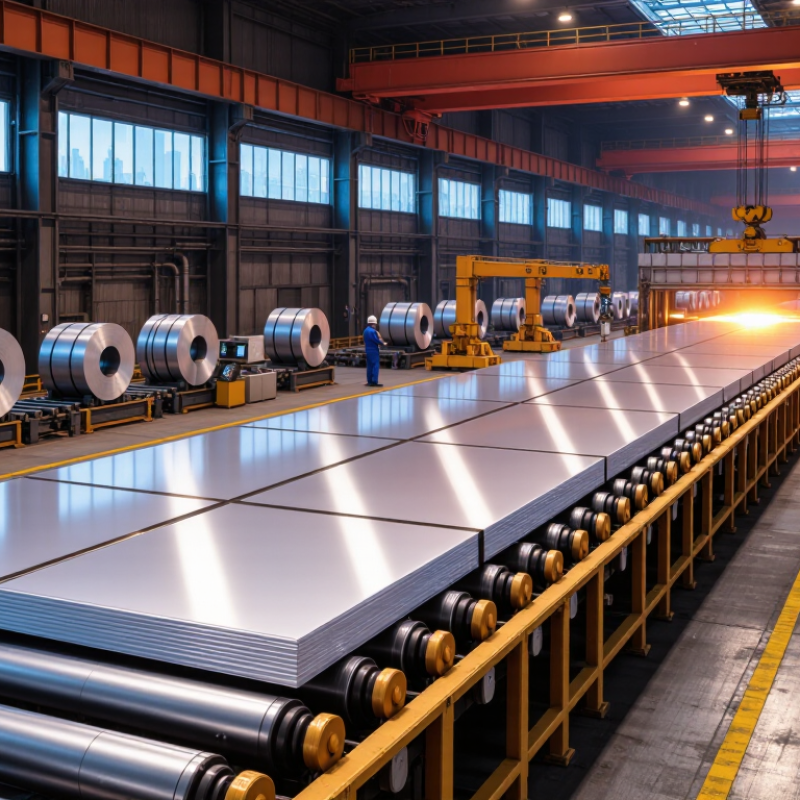
Modern steel sheets from China are flat, rolled steel products made for construction, machinery, vehicles, roofing, and interior fabrication. They may be hot-rolled, cold-rolled, galvanized, or coated with protective finishes. Each type behaves differently during cutting, bending, welding, and painting.
A cold-rolled sheet usually has a smoother surface and tighter thickness control. Galvanized sheet contains a zinc layer that helps resist moisture and corrosion. Some modern products include recycled steel, but the percentage varies by mill and production route. Sustainability depends on more than origin. Energy sources, furnace technology, transport distance, coating thickness, and service life all matter. The label alone proves little. Technical documents should confirm grade, dimensions, surface treatment, and testing methods.
Tips: Request a mill certificate, coating measurement, and independent inspection report. Check the actual thickness at several points, not just one edge. Ask about recycled content and production emissions when environmental performance matters. Store sheets on dry supports, with airflow beneath the bundles. Small mistakes here can cause early rust. Be careful with broad sustainability claims. A cheaper sheet may create more waste if its surface fails, bends unevenly, or requires frequent replacement. Supplier quality can vary, even within the same specification. That uncomfortable detail deserves attention.
| Data Dimension | Typical Value or Range | What It Means for Modern Steel Sheets | Sustainability Relevance |
|---|---|---|---|
| Basic Material | Low-carbon or micro-alloyed steel | Modern sheets commonly use low-carbon steel grades, with small additions of elements such as manganese, silicon, niobium, titanium, or vanadium to improve strength and formability. | Higher strength can reduce the amount of steel required in some applications, lowering material use without changing the basic recycling route. |
| Common Sheet Thickness | Approximately 0.4–3.0 mm for many industrial applications | Thickness depends on the end use, including construction panels, automotive components, appliances, furniture, and general fabrication. | Using the thinnest sheet that safely meets structural and durability requirements can reduce resource consumption and transport weight. |
| Typical Product Width | Approximately 600–2,000 mm | Steel sheets are supplied in different widths and may be delivered as flat sheets or slit from wider coils. | Appropriate width selection can reduce cutting waste during fabrication. |
| Hot-Rolled Sheet | Usually produced above the steel recrystallization temperature | Hot rolling is commonly used for thicker products and applications where a smooth cold-rolled surface is not essential. | It generally requires less additional rolling energy than cold-rolled sheet, although surface finish and dimensional precision are different. |
| Cold-Rolled Sheet | Commonly used for thinner, smoother, and more dimensionally precise products | Cold rolling improves surface quality, thickness control, and formability for applications such as panels, appliances, and precision components. | Additional processing increases energy demand, but longer service life and reduced manufacturing defects may improve total life-cycle performance. |
| Zinc-Coated Sheet | Typical coating masses range from about 60–350 g/m² total, depending on specification | Hot-dip galvanizing or electro-galvanizing provides sacrificial corrosion protection to the steel substrate. | Corrosion protection can significantly extend service life and reduce replacement frequency, but coating production and end-of-life separation should be considered. |
| Aluminum-Zinc or Zinc-Aluminum-Magnesium Coating | Coating composition and mass vary by product specification | These metallic coatings are designed to improve corrosion resistance and, in some environments, provide longer protection than conventional zinc coatings. | Longer durability may reduce maintenance and replacement impacts; environmental performance depends on coating chemistry, thickness, and manufacturing energy. |
| Embodied Greenhouse-Gas Emissions | Approximately 0.3–0.8 t CO₂e per tonne of crude steel from scrap-based electric-arc production; approximately 1.8–2.3 t CO₂e per tonne from conventional ore-based production | Actual emissions vary with the ironmaking route, electricity mix, recycled content, process efficiency, product finishing, and accounting boundaries. | Production route is one of the most important sustainability factors. A product-specific environmental product declaration is more reliable than a generic estimate. |
| Recycled Steel Content | Highly variable; often higher in electric-arc-furnace production than in ore-based production | Steel can be produced from recycled scrap, iron ore, or a combination of both. The actual recycled content must be verified for the specific product and batch. | Higher scrap use can reduce demand for virgin ironmaking, but scrap availability, contamination, electricity sources, and quality requirements also affect results. |
| Recyclability | Steel is permanently recyclable without loss of its basic material properties | Steel sheets can generally enter established ferrous-metal recycling systems after use, subject to coatings, attached materials, and collection practices. | High recyclability supports circular material use and can reduce the need for primary raw materials in future production. |
| Service Life | Commonly several decades when correctly specified, fabricated, coated, and maintained | Actual durability depends on exposure conditions, coating system, humidity, salt, pollutants, mechanical damage, and maintenance. | A longer service life generally reduces the annualized environmental impact of production, transport, repair, and replacement. |
| Corrosion Protection | Metallic coating, paint coating, weather-resistant design, or a combination of systems | Protection may include galvanized layers, organic coatings, passivation, sealing, and suitable edge treatment. | Effective corrosion control reduces material loss and replacement demand, but coating chemicals and maintenance materials should be included in a full assessment. |
| Manufacturing Standards | Product specifications may reference Chinese GB/T standards and corresponding international standards | Typical requirements cover chemical composition, mechanical properties, dimensions, surface quality, coating mass, tolerances, testing, and packaging. | Documented standards improve consistency, reduce manufacturing defects, and support more reliable life-cycle and quality comparisons. |
| Energy Source | Varies by facility and production route | Electricity and fuel may be used in melting, rolling, annealing, galvanizing, coating, and finishing operations. | Lower-carbon electricity, energy recovery, process optimization, and renewable power procurement can reduce manufacturing emissions. |
| Transport Efficiency | High material density; large quantities can be moved per shipment | Steel sheets are heavy but compact, allowing efficient bulk transport by rail, water, or full-load road freight. | Transport emissions are usually influenced more by distance, mode, load utilization, and packaging than by the steel sheet itself. |
| Packaging and Handling | Often includes steel or wood supports, protective paper, plastic film, and moisture barriers | Packaging protects surfaces from abrasion, water, and corrosion during storage and shipment. | Reusable supports, recyclable packaging, reduced plastic film, and damage prevention can lower packaging waste and product losses. |
| Key Sustainability Verification | Product-specific EPD, recycled-content statement, mill test certificate, and energy or emissions data | Reliable assessment requires information for the actual grade, coating, thickness, production route, electricity mix, and delivery stage. | Certificates and traceable data are more dependable than broad claims such as “green steel” or “low-carbon steel” without defined boundaries. |
Production methods, energy sources, recycled content, durability, transport, and recovery all matter. Origin alone proves little.
No. Its result depends on electricity sources, scrap quality, and operating efficiency. Coal-heavy power can reduce its advantage.
Scrap reduces pressure on iron ore and supports circular production. Contamination, limited supply, and sorting losses remain concerns.
Ask for energy records, mill-level emissions data, recycled-content proof, and traceable batch records. Certificates alone are not enough.
It may use less material and reduce transport weight. However, early failure can create replacement waste. Strength still matters.
Galvanized and painted surfaces can extend service life. Their chemical composition may complicate processing and recycling.
A corrosion-resistant sheet may last for decades. Longer service reduces replacement waste, repeated transport, and repair materials.
Shipping distance, packaging, loading efficiency, and delivery methods all influence emissions. The final footprint can vary significantly.
They provide useful information, but paperwork may hide gaps. Site audits and batch tracking offer stronger evidence.
It should disclose uncertain data, inconsistent reporting boundaries, and incomplete records. Sustainability is not impact-free. My assessment may still miss details.
Modern steel sheets from China are flat steel products used in construction, manufacturing, transportation, and many other industries. Their sustainability depends not only on their strength and service life, but also on how they are produced and processed. Production may involve ironmaking, steelmaking, casting, rolling, coating, cutting, and forming, with each stage requiring energy and creating potential environmental impacts. Efficient equipment, reduced material waste, cleaner processing methods, and longer product lifespans can all improve overall performance.
To understand how sustainable are modern steel sheets, it is necessary to examine China’s energy mix, production emissions, and recycling practices. Steel made with lower-carbon electricity, greater use of recycled scrap, and improved pollution-control systems generally has a smaller environmental footprint. Buyers should assess factors such as recycled content, energy consumption, greenhouse-gas emissions, transportation distance, durability, certifications, and end-of-life recyclability. A balanced evaluation should consider the entire life cycle rather than focusing only on the manufacturing stage.

 Puppet Steel