 Puppet Steel
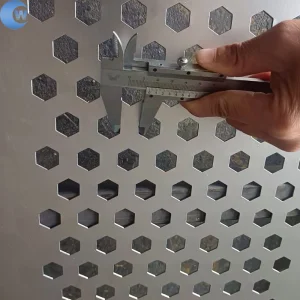
Discover our primary selection of certified perforated sheets engineered to comply with European manufacturing norms and DIN performance parameters.
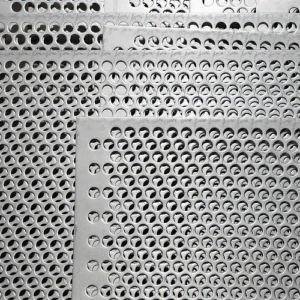
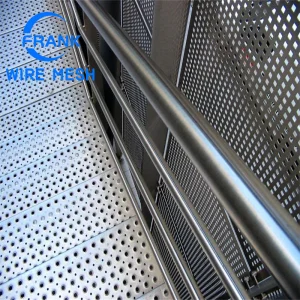
Germany is traditionally known as the industrial engine of the European Union. In 2024 and heading into 2025, German manufacturers continue to undergo heavy modernization processes driven by the **Industrie 4.0** agenda and decarbonization objectives. Perforated steel sheets serve as critical input materials across multiple high-performance industries in major regional hubs, such as North Rhine-Westphalia, Bavaria, and Baden-Württemberg.
The requirement profile for perforated metal in Germany is exceptionally rigid. Whether utilized in high-efficiency acoustic attenuation systems inside Stuttgart's automotive test tracks or in industrial separation components within chemical processing plants in Leverkusen, German buyers prioritize materials that comply precisely with national **DIN standards (e.g., DIN 24041)**. Key focus areas include dimensional accuracy, structural load capacity, and specialized surface processing.
Moreover, sustainable architecture in Berlin, Hamburg, and Munich increasingly integrates perforated structural panels for solar control and thermal regulation. By allowing optimized natural lighting and airflow while mitigating thermal radiation, perforated screens help major commercial complexes achieve prestigious building certifications like DGNB and LEED.
Meeting the stringent quality thresholds of Europe's top-tier industrial buyers.
Global buyers are facing unprecedented macroeconomic pressures, from rising energy costs to raw material price volatility. The key challenges in sourcing perforated steel sheets involve balance: how to maintain reliable mechanical integrity, satisfy zero-defect quality thresholds, and achieve target unit costs.
Historically, purchasing departments had to make compromises between high-cost domestic fabricators in Europe or cheaper, less reliable vendors abroad. However, modern manufacturing frameworks have closed this gap. Importers inside Germany are increasingly leveraging **dual-sourcing strategies**—partnering with local German service centers for rapid prototype iterations and small-batch orders, while leveraging long-term contracts with highly integrated, overseas advanced smart factories for scale production.
To ensure supply chain resilience, global procurement managers must verify that their manufacturing partners operate under robust quality-management ecosystems. Systems certified by ISO 9001:2015, alongside rigorous material traceability schemes (such as EN 10204 3.1 Mill Test Certificates), are no longer optional—they are foundational necessities for modern industrial integration.
Ningbo Puppet Steel Co., Ltd. is a professional Steel Sheet Manufacturer | Cold Rolled, Hot Rolled & Galvanized Steel Supplier committed to providing high-quality steel products and customized metal solutions for customers worldwide. Serving industries such as construction, infrastructure, manufacturing, automotive, energy, home appliances, and industrial equipment, the company has built a strong reputation for reliable products and consistent service.
Located in Ningbo, China, Puppet Steel operates advanced processing and manufacturing facilities equipped with modern production lines and precision quality inspection systems. The company specializes in a comprehensive range of steel products, including cold rolled steel sheets, hot rolled steel sheets, galvanized steel sheets, galvalume steel sheets, prepainted steel sheets, carbon steel sheets, structural steel sheets, and customized steel processing solutions.
With extensive industry experience, the company offers flexible OEM and customized manufacturing services to meet various project requirements. From material selection and cutting to surface treatment and packaging, every production stage is carefully managed to ensure product consistency, dimensional accuracy, and long-term performance. Strict quality control procedures are implemented throughout the manufacturing process to comply with international standards and customer specifications.
Puppet Steel focuses on delivering durable, corrosion-resistant, and cost-effective steel products suitable for demanding applications in both domestic and international markets. The company maintains long-term partnerships with contractors, distributors, wholesalers, fabricators, and industrial manufacturers across North America, Europe, Southeast Asia, the Middle East, and other global regions.
Driven by innovation, quality, and customer satisfaction, Ningbo Puppet Steel Co., Ltd. continuously invests in technology upgrades and production efficiency improvements. Through competitive pricing, stable supply capacity, timely delivery, and professional technical support, the company strives to become a trusted global partner for steel sheet manufacturing and metal material solutions.
By operating in the strategic port city of Ningbo, China, we combine automated high-speed punching presses (China Industry 4.0 initiatives) with highly direct international logistics routes. We guarantee rapid dispatching to European ports like Hamburg, Bremen, and Rotterdam.
Our raw material optimization processes allow us to offer competitive pricing models while closely respecting the stringent chemical limits (such as low-carbon tolerances) expected by German metallurgists.
Detailed engineering data to support procurement decision-making.
| Steel Grade Equivalent | Yield Strength (MPa) | Tensile Strength (MPa) | Recommended Hole Patterns | Primary Industrial Applications |
|---|---|---|---|---|
| 1.4301 (AISI 304) | ≥ 210 | 520 - 720 | Round (60° staggered), Square | Food processing, architectural facade panels, HVAC ducts |
| 1.4404 (AISI 316L) | ≥ 220 | 520 - 670 | Slotted, custom round profiles | Marine filters, chemical reactor grids, environmental separation |
| DX51D + Z (Galvanized) | - | 270 - 500 | Decorative, staggered round | Cable trays, safety steps, structural partition walls |
| AlMg3 (Aluminum 5754) | ≥ 80 | 190 - 240 | Large open area hexagonal | Acoustic shielding, automotive heat shields, weight-critical designs |
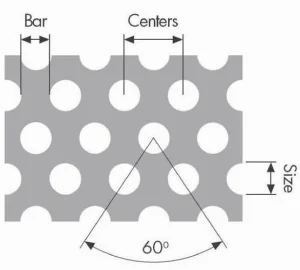
Ao (%) = (d² * 90.69) / p²
Where d is the hole diameter, and p is the pitch (distance between hole centers). Staggered 60-degree orientations yield the optimal strength-to-open-area ratio for filtration and acoustics.
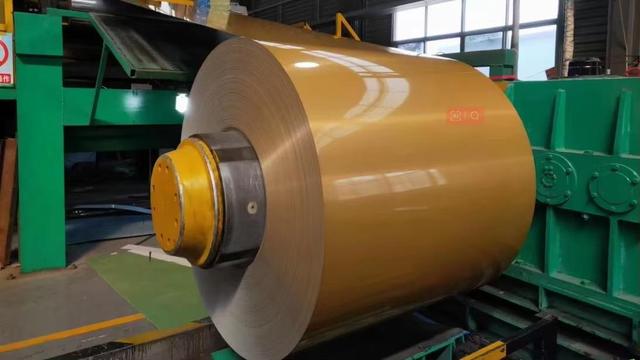
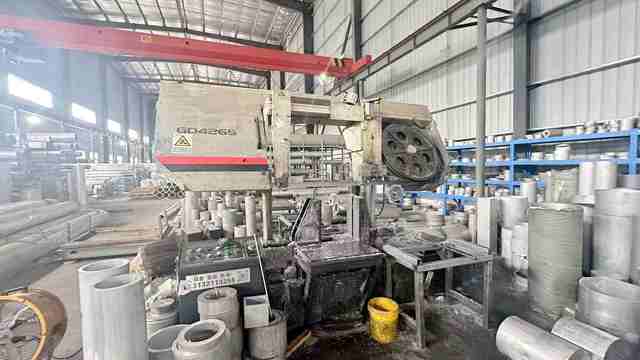
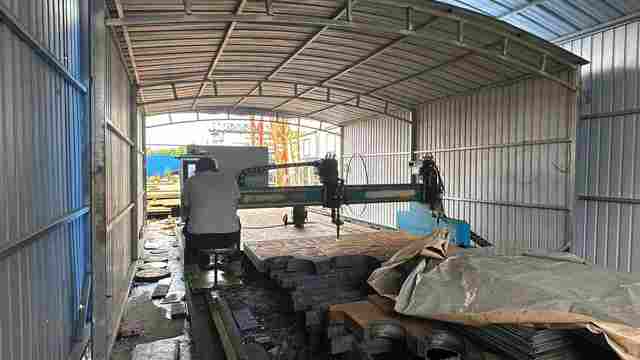
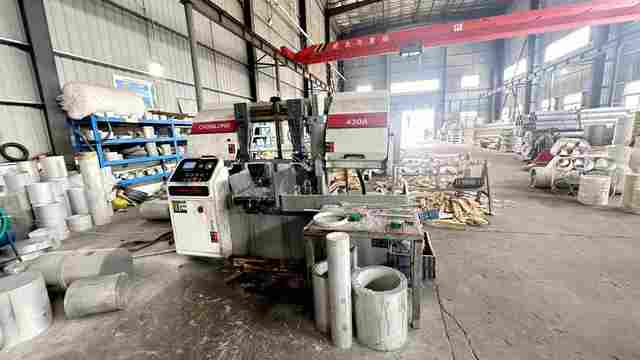
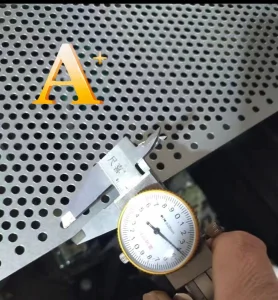
Inside our advanced manufacturing units: high-precision automated stamping, shear slitting, and dimensional QC checking.
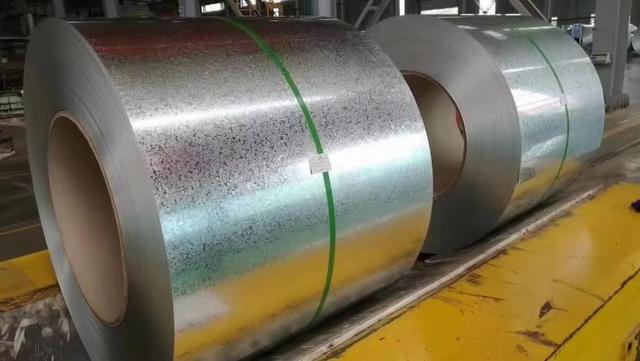
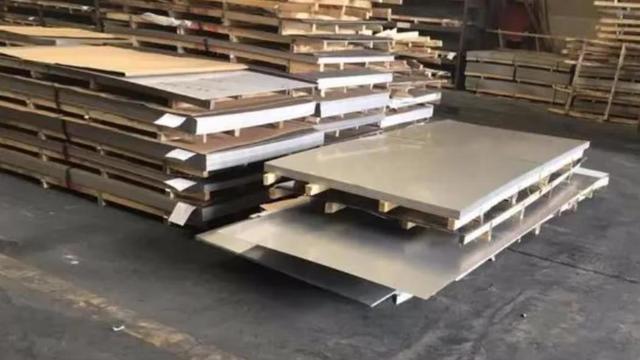
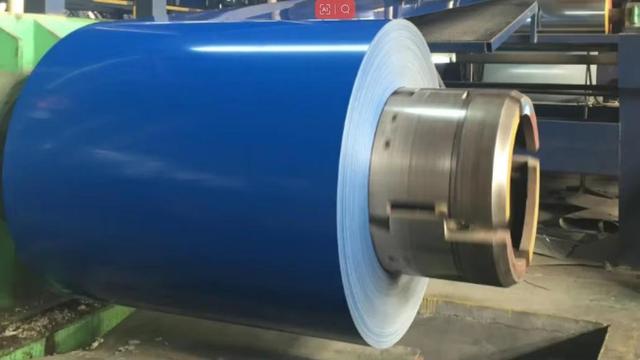
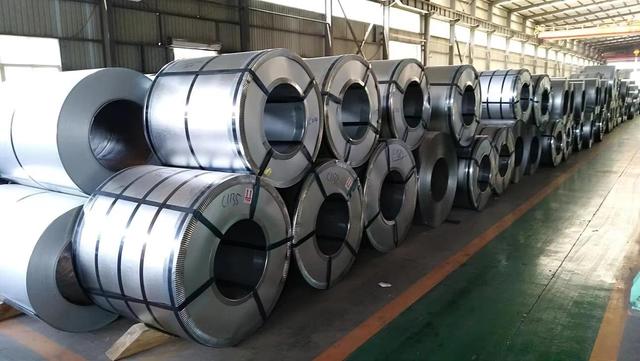
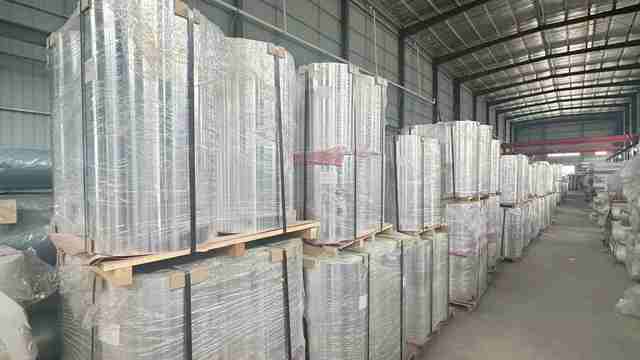
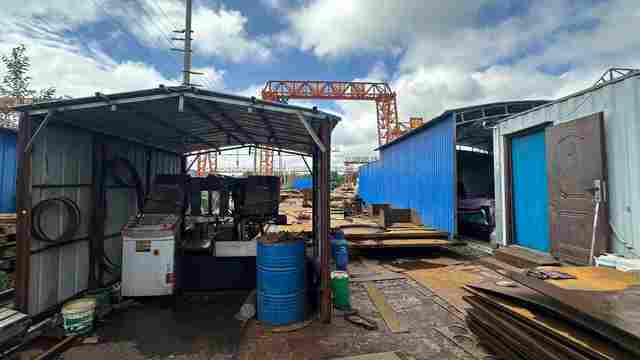
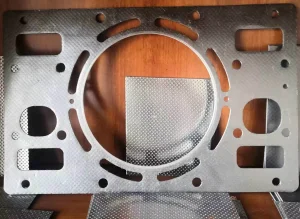
From structural composite elements to critical high-temperature thermal screens, engineered for performance.
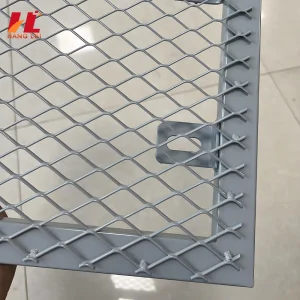
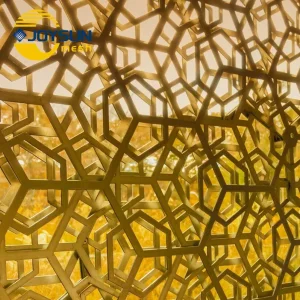
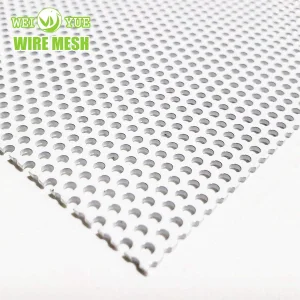
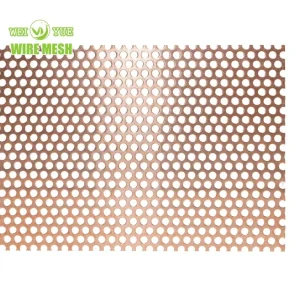
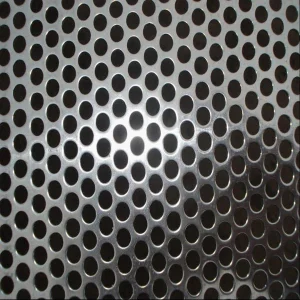
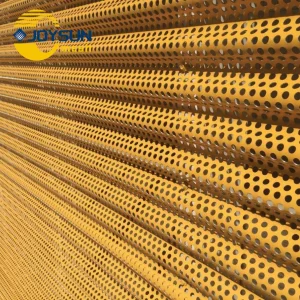
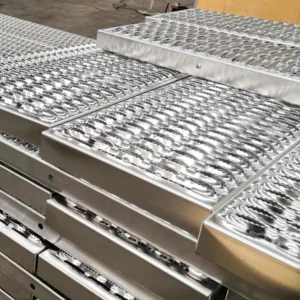
Explore our primary array of sheet materials, anti-skid floor systems, and architectural panels.
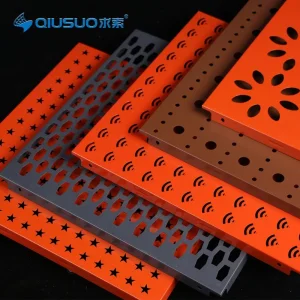
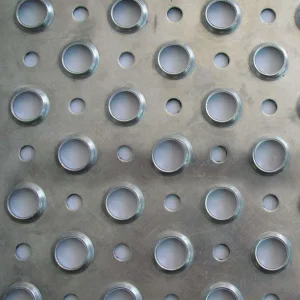
Answers to critical engineering questions regarding perforated metal supply chains.
In Germany, perforated plates are primarily standardized under **DIN 24041**. This standard defines the designations, execution styles, dimensional limits, and tolerances for perforated sheets with round, square, hexagonal, or slotted punching geometries. Ensuring adherence to DIN 24041 guarantees that pitch dimensions, margin widths, and flatness deviations remain within predictable parameters suitable for high-precision European manufacturing assembly.
The structural performance depends heavily on the **Equivalent Yield Strength** of the perforated geometry, which is determined by the open area percentage and the orientation of the layout (60-degree staggered vs. straight lines). Formulas utilize the **Ligament Width (w)**—which is the distance of solid metal remaining between adjacent holes—to determine stress concentration factors. Our engineering department provides calculated deflection profiles under distributed mechanical loads to ensure safety compliance.
For standard atmospheric and architectural environments (such as external cladding panels in industrial cities), steel grade **1.4301 (V2A / AISI 304)** is the benchmark material. However, for applications exposed to road salt aerosols, marine harbor structures (such as docks in Hamburg), or chemical fumes, we recommend **1.4404 (V4A / AISI 316L)** due to its added molybdenum content which prevents pitting corrosion.
Yes. Utilizing our specialized CNC mechanical punching lines and high-density stamping machinery, we are capable of executing micro-perforation patterns where the hole diameter is equal to or smaller than the overall sheet thickness (e.g., 0.8 mm holes on a 0.8 mm stainless sheet). These find heavy use in fuel cell backplates, filtration strainers, and acoustic applications.
Every production lot undergoes rigorous inspection including sheet thickness gauging, caliper verification of hole diameter/pitch, flatness correction using high-precision levelers, and chemical analysis verification. We supply standard EN 10204 3.1 Mill Test Certificates detailing chemical trace elements and mechanical performance metrics for complete transparency and compliance with the German Supply Chain Due Diligence Act (Lieferkettensorgfaltspflichtengesetz).
Get in touch with Ningbo Puppet Steel's international engineering support department. Send us your CAD drawings (.dwg, .dxf) or custom PDF specifications for a detailed quote.